
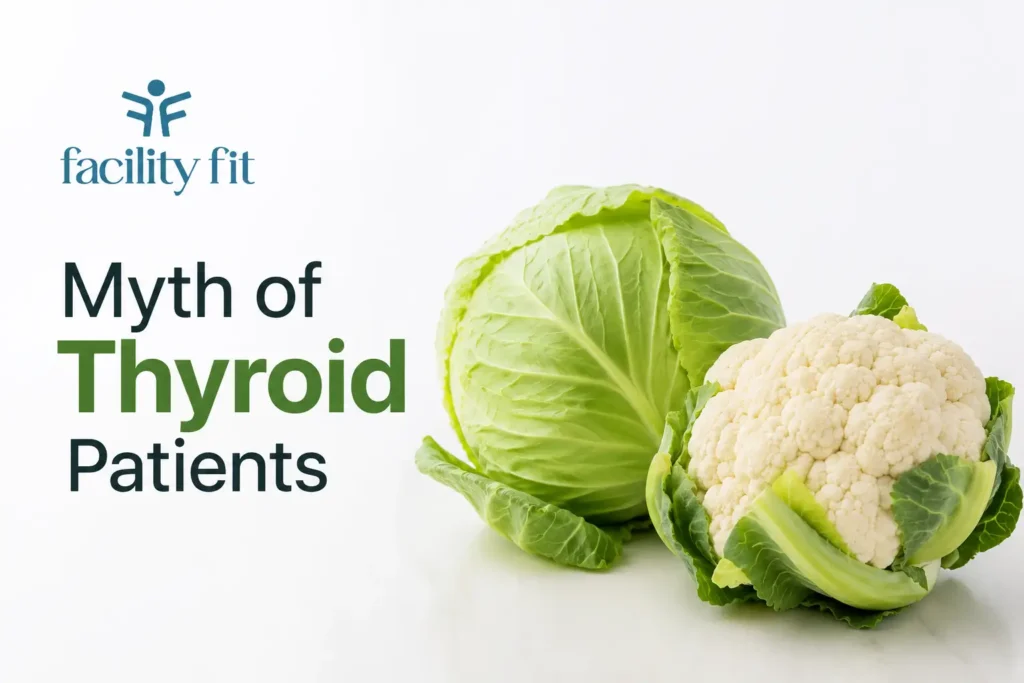
For years, people with thyroid issues have been told to stay away from cabbage, cauliflower, broccoli, and similar vegetables.
Some avoid them completely out of fear. Others feel confused because one doctor says “avoid,” while another says “it’s fine.”
So what does science actually say?
The truth is more balanced, more practical, and far less scary than social media myths make it sound.
The Origin of the Myth
Cabbage, cauliflower, broccoli, kale, and other cruciferous vegetables contain natural compounds called goitrogens.
These compounds can mildly interfere with iodine utilization in the thyroid gland — but mainly when:
• consumed in extremely large amounts
• eaten raw excessively every single day
• or when iodine intake is already poor
This is where the myth started.
Over time, a small scientific observation became a generalized fear:
“Thyroid patients should never eat cabbage or cauliflower.”
But modern nutritional science does not support such extreme fear.
What Science Actually Says
For most people with thyroid conditions:
• Moderate intake is generally safe
• Cooked forms are even safer
• Completely avoiding these vegetables is usually unnecessary
Cooking significantly reduces the goitrogenic effect.
In practical real-life nutrition, a normal serving of cooked cauliflower curry or cabbage fry is not likely to “damage” the thyroid.
In fact, these vegetables are nutritionally powerful.
They provide:
• Fiber
• Antioxidants
• Vitamin C
• Folate
• Plant compounds that support metabolism and gut health
Avoiding them completely may actually reduce dietary diversity and nutrition quality.
The Real Problem Is Not the Vegetable
Health rarely depends on one food alone.
The bigger concerns for thyroid health are often:
• chronic stress
• poor sleep
• nutritional deficiencies
• sedentary lifestyle
• ultra-processed food intake
• lack of consistency
• metabolic imbalance
Unfortunately, many people focus only on “foods to fear” instead of building a sustainable lifestyle.
That approach creates anxiety around eating rather than understanding the body intelligently.
Raw vs Cooked: A Practical Perspective
There is a difference between:
• eating huge quantities of raw cruciferous juices daily
and
• eating normally cooked vegetables as part of balanced meals
The second is generally considered safe for most individuals.
Moderation matters. Context matters. Overall lifestyle matters.
Nutrition is not black and white.
A Smarter Way to Think About Food
The human body is not fragile.
Health is built through patterns, not panic.
When people hear “this food is bad,” they often stop asking better questions:
• How much?
• How often?
• In what form?
• Alongside what lifestyle?
True wellness is not about fear-based restriction.
It is about understanding, balance, and sustainable habits.
The Facility Fit Perspective
At Facility Fit, wellness is approached with practicality, education, and balance — not fear.
Instead of promoting food myths, the focus is on:
• informed nutrition
• personalized lifestyle support
• metabolic awareness
• consistency
• and long-term wellbeing
Because real health is not created by avoiding one vegetable.
It is created by understanding the body better.
Sujatha Stephen MSc RD (Clinical Nutritionist) HOD Yashodha Hospitals, facility.fit