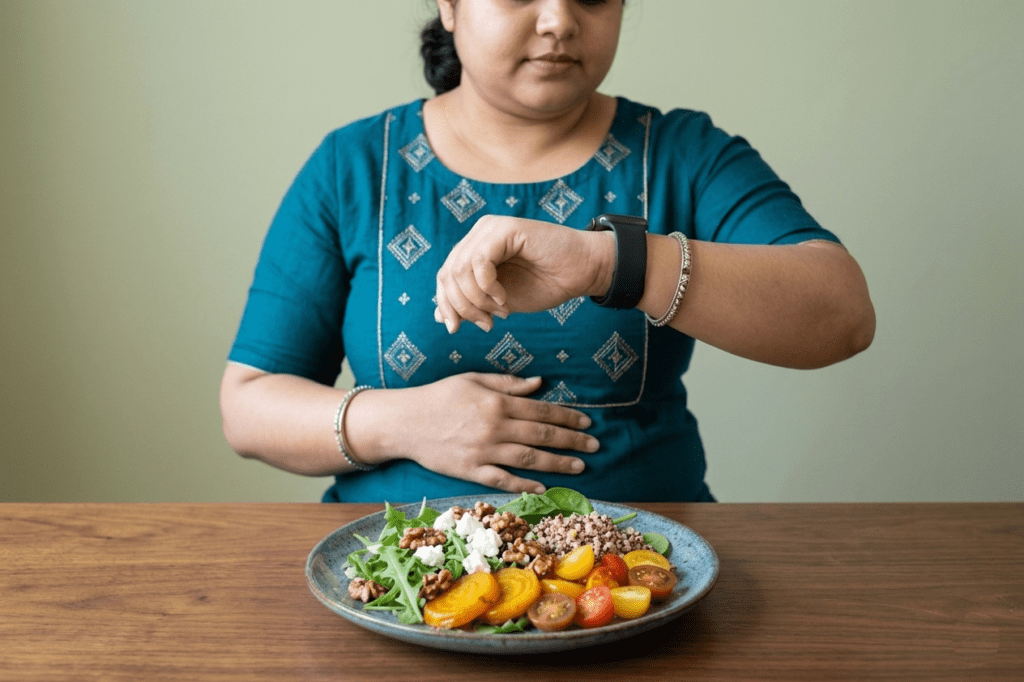
Starving vs Smart Fasting: Know the Difference
Fasting isn’t new to India. It has always been part of our lifestyle.
Take Shivaratri. People fast with intention, discipline, and awareness. It’s not random, and it’s definitely not daily. It’s done occasionally, and that’s exactly why it works.
Now compare that to what’s happening today.
Fasting is being followed every day, often aggressively, as a shortcut for fat loss or “detox.” And that’s where the problem begins.
The real issue is simple.
Smart fasting and starving are not the same thing.
Smart fasting is planned. It fits into your routine. It usually means a simple 12–14 hour gap between dinner and breakfast. It is supported with proper meals, and energy levels stay stable.
Starving is different. It’s random meal skipping, long fasting hours without proper nutrition, and usually ends with overeating. That’s when people feel low on energy, irritated, and stuck in a cycle.
When you stop eating, your body first uses stored glucose. After a few hours, it starts using stored fat. This is the benefit people are trying to get.
But here’s what often gets ignored.
If fasting becomes too long or too frequent, the body doesn’t just burn fat. It can also start breaking down lean tissue. Energy drops. Hunger increases. And most people end up eating more than they need later.
More fasting does not mean more fat loss. Many times, it leads to the opposite.
There’s also a growing trend of combining fasting with very low-carb diets like keto.
On paper, both push the body to use fat for energy. But in real Indian lifestyles, this combination is hard to sustain. Our regular food includes rice, roti, dal. Removing carbs completely while also fasting can reduce energy, affect daily work, and increase cravings. Most people cannot maintain it for long, and it often leads to binge eating.
You don’t need to go that extreme.
What works better is much simpler.
A natural 12–14 hour fasting window is enough for most people. Along with that, focus on proper home-style meals. Include protein like dal, eggs, or paneer. Add vegetables daily. Avoid long gaps followed by very heavy meals.
If these basics are not in place, fasting won’t fix anything.
The right way to look at fasting is this.
It’s a tool.
Like Shivaratri fasting—it works because it is done occasionally, with purpose, and not overused. The moment you turn it into a daily extreme habit, it stops helping and starts creating problems.
Final take.
Fasting is not bad. But overdoing it is.
Smart fasting supports your lifestyle. Starving disrupts your body.
You don’t need aggressive methods to see results. You need consistency, better food choices, and a routine you can actually follow long term.
Keep it simple. That’s what works.